Turks and Caicos All Inclusive Resort Cost Per Night
By the StayCompare Editorial Team — reviewed for accuracy. Last updated October 2026. This article is for informational purposes and reflects typical market pricing; verify current rates and terms at the point of booking.
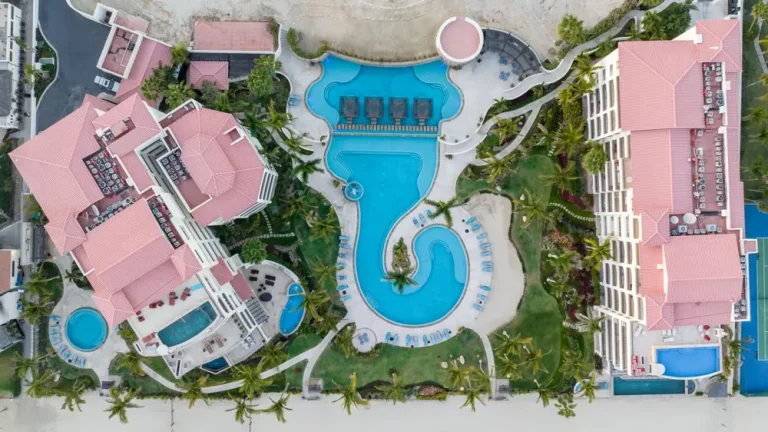
Turks and Caicos prices the Caribbean premium boutique pole: Grace Bay white sand and the small-resort structure that prices above the volume corridors — with the all-inclusive structure genuinely rare and genuinely premium where it exists.
This guide prices Turks and Caicos all-inclusive costs for 2026: the rare AI properties by tier, the à la carte structure the destination defaults to, and the total-week math the premium geography prices.
What This Guide Covers
- Understanding the topic and how pricing works
- The main categories and how they compare
- Three realistic scenarios with real numbers
- A sample budget breakdown
- Practical strategies to control costs
- Common risks and how to avoid them
- Best practices and ongoing habits
- Frequently asked questions
Understanding Turks and Caicos All Inclusive Resort Cost Per Night
The 2026 structure: the destination genuine all-inclusives run $450–$800 per adult nightly (the boutique AI tier — a handful of properties) with premium couples’ tiers to $1,200+. The default market is à la carte: Grace Bay resorts price $400–$900 nightly room-only for two, with the island dining economy ($80–$180 daily per couple at the quality level the destination prices) completing the honest total.
The total-week math: the AI structure prices $6,300–$11,200 for a couple week (the boutique bundle premium); the room-plus-dining structure prices $5,600–$9,800 — near-matched totals that price the decision as structure preference rather than arithmetic. What the destination delivers for the premium: Grace Bay itself (the consistently-ranked beach the geography charges for), the small-resort quiet the volume corridors cannot replicate, and the dive-and-water economy the island culture runs. Flights price $600–$1,100 per person from US gateways — the premium geography access line.
As a working planning number for Turks and Caicos in 2026, the typical range sits at $400–$1,600 — with the categories and scenarios below explaining what moves a specific case up or down that range.
Key Categories and Options
The main approaches and how they compare on cost, convenience and use case:
| Category / Type | Description | Common Use Case | Cost / Effort Level |
|---|---|---|---|
| Boutique AI properties | The rare genuine bundles at premium rates | AI-preference travelers at premium budgets | $450–$800/adult/night |
| Grace Bay à la carte resorts | Room-only with the island dining economy | The destination default | $400–$900/night for two + dining |
| Premium couples flagships | The luxury tier with AI structures | The no-compromise market | $1,200+/night for two |
The right choice depends on the scenario that matches your travel pattern — the three below cover the situations most travelers actually face.

Three Realistic Scenarios
The boutique AI week
Two adults, 7 nights at a genuine AI boutique property.
- Nightly (couple AI) — $900–$1,400
- Weekly total — $6,300–$9,800
Why this matters: the boutique AI week prices the bundle premium — the structure preference the rare properties charge for.
The Grace Bay à la carte week
Two adults, 7 nights room-only plus island dining.
- Nightly room (couple) — $500–$800
- Dining daily (couple) — $100–$160
- Weekly total — $4,200–$6,720
Why this matters: the à la carte structure prices the destination default — the dining economy the island quality delivers.
The premium flagship stay
Two adults, 5 nights at the luxury tier with AI structure.
- Nightly (couple premium) — $1,200–$1,600
- 5-night total — $6,000–$8,000
Why this matters: the flagship prices the no-compromise tier — the premium the boutique geography charges at the top.
The scenarios differ mainly in scope and commitment level — the same decision logic applies at every scale.
Sample Budget Breakdown
The table below shows how a typical mid-range budget for turks and caicos all inclusive resort cost per night distributes across the main cost lines. Adjust the percentages to your own plans before using it as a savings target.
| Category | Estimated Amount | Explanation | Optimization Tip |
|---|---|---|---|
| Nightly structure by route | $400–$1,600 | AI boutique versus à la carte default | Near-matched totals price the decision as structure preference |
| Island dining economy | $100–$180 | Daily per couple, à la carte route | The quality level the destination prices genuinely |
| Flights (per person) | $600–$1,100 | US gateways | The premium geography access line |
Figures are indicative 2026 market ranges. Program terms, taxes and rates change — verify totals at the point of booking.
Practical Strategies to Control Costs
Cost control on turks and caicos all inclusive resort cost per night is mostly about information habits. These are the strategies that consistently deliver the largest savings:
Destination-shop before resort-shop
Mexico, Dominican Republic and Egypt deliver the lowest per-night all-inclusive bases; Maldives and French Polynesia the highest — choosing the destination moves the budget more than any resort choice inside it.
Advantages:
- Delivers measurable savings on real bookings
- No special status or points balance required
Disadvantages:
- Long-haul flights can eat the resort savings — the flight line belongs in the same comparison.
- Requires habits the casual traveler may not maintain
Verify the actual inclusions before booking
Premium-brand liquor, à la carte reservations, kids-club ages and spa credits vary within the same price band — the inclusions audit separates the genuine value from the marketed value.
Advantages:
- Delivers measurable savings on real bookings
- No special status or points balance required
Disadvantages:
- Requires reading the fine print and recent guest reviews rather than the booking-site summary.
- Requires habits the casual traveler may not maintain
Watch the kids-pricing structure
Kids-stay-free windows and under-12 discount tiers change family totals by thousands — the pricing structure matters more than the adult rate in family comparisons.
Advantages:
- Delivers measurable savings on real bookings
- No special status or points balance required
Disadvantages:
- Age limits are strict and date windows are narrow — the structure serves specific family shapes only.
- Requires habits the casual traveler may not maintain
Re-book when prices drop before final payment
Resort pricing moves — the refundable booking re-shopped at 60 and 30 days pre-travel routinely captures 10–20% drops without any risk.
Advantages:
- Delivers measurable savings on real bookings
- No special status or points balance required
Disadvantages:
- Requires calendar discipline and a booking class that permits modification.
- Requires habits the casual traveler may not maintain
Common Risks and How to Avoid Them
Every booking pattern carries failure modes worth knowing before the money moves:
Flight costs dominate the resort arithmetic
- The issue: The resort saving of $400 versus a competing destination disappears against a $600 flight difference — the total-trip comparison is the only honest one..
- Why it happens: The resort saving of $400 versus a competing destination disappears against a $600 flight difference — the total-trip comparison is the only honest one..
- Prevention: Verify current terms before booking.
Chain quality varies by property, not by brand
- The issue: The same flag delivers a renovated gem and a tired property in the same destination — the specific-property reviews outrank the brand promise every time..
- Why it happens: The same flag delivers a renovated gem and a tired property in the same destination — the specific-property reviews outrank the brand promise every time..
- Prevention: Verify current terms before booking.
The hidden-cost stack inside “all-inclusive”
- The issue: Premium dining carries surcharges, spa services bill separately, motorized excursions price à la carte, and premium-brand liquor sits behind a top-shelf fee — the $180 nightly can quietly become $240.
- Why it happens: Verify the inclusions list at booking, not at the bar..
- Prevention: Verify current terms before booking.
Seasonal price swings dwarf every other saving
- The issue: The same suite prices $340 in January and $680 in late December — the calendar choice moves the budget more than any shopping strategy.
- Why it happens: Fix the dates first, then shop..
- Prevention: Verify current terms before booking.

Best Practices and Ongoing Habits
The recurring habits that keep costs controlled between trips:
| Habit | Frequency | Cost | Why It Matters |
|---|---|---|---|
| Re-shop refundable rates at 60/30 days | Twice pre-trip | Free | The 10–20% drops the calendar discipline captures risk-free. |
| Kids-pricing structure check | Family trips | Free | The age tiers and stay-free windows that move family totals by thousands. |
| Total-cost comparison before booking | Every trip | Free | The flight-plus-resort-plus-fees spreadsheet that decides honestly. |
| Inclusions audit against your pattern | Every shortlist | Free | The premium-dining and spa questions that separate real value from marketed value. |
These habits compound: the travelers who run them pay measurably less over years, not because of tricks, but because the information asymmetry runs their way.
Frequently Asked Questions
When is the cheapest time to book all-inclusive resorts?
Two windows matter: the shoulder seasons (late April–May, October–early November in the Caribbean) price 25–40% under peak, and the booking lead of 4–6 months typically prices below last-minute in the resort market — the calendar and the lead-time stack together.
Which destinations have the cheapest all-inclusives?
The honest 2026 ladder: Mexico (Riviera Maya, Cancun) and the Dominican Republic deliver the value floor at $120–$250 nightly per adult all-inclusive; Egypt and Turkey price similar value for European travelers; the Maldives and French Polynesia price the premium ceiling — the destination moves the budget more than the resort.
Are all-inclusive resorts actually cheaper?
Genuinely yes when the pattern fits: the $180–$350 per-night bundle prices below the à la carte stack of dining, drinks and activities it replaces at comparable quality — the honest comparison prices your actual consumption (two dinners out versus beachside everything) rather than the theoretical one.
What is typically NOT included in all-inclusive packages?
The standard exclusions: premium-brand liquor, à la carte dinner surcharges at specialty venues, spa services, motorized water sports, off-resort excursions, and sometimes kids-club premium tiers — each a line item the $60–100 daily hidden-cost stack builds from.
Summary
Planning turks and caicos all inclusive resort cost per night in Turks and Caicos starts with the honest range — $400–$1,600 for the scenarios most travelers actually book — then works backwards through the boutique-geography premium.
Turks and Caicos prices the Caribbean premium boutique: $450–$800 AI nightly against $400–$900 à la carte defaults, near-matched week totals pricing the structure preference. Pay the geography premium for Grace Bay and the small-resort quiet — the volume corridors cannot deliver either — and the premium prices what the destination honestly sells. Verify current terms at the point of booking, price totals rather than headline rates, and let the comparison habits compound across every trip. Those three practices protect more budget than any single program choice.
Related Guides
- Dominican Republic vs Mexico All Inclusive Cost Comparison
- Best Time to Book All Inclusive Resort Cost Savings Caribbean
- Spain All Inclusive Cost Comparison Tenerife vs Costa Del Sol
- Family of Five All Inclusive Week Total Cost Mexico
- Bali Luxury Resort vs All Inclusive Cost Comparison
- Egypt vs Turkey All Inclusive Resort Cost Comparison