Day Use Hotel Rooms Cost Per Hour Guide USA 2026
By the StayCompare Editorial Team — reviewed for accuracy. Last updated October 2026. This article is for informational purposes and reflects typical market pricing; verify current rates and terms at the point of booking.
Day-use rooms price the hours between flights and checkins — the 4-to-8-hour blocks the daytime hotel economy now sells at half-to-two-thirds of nightly rates. The layover-and-arrival patterns the structure serves are definable, and the 2026 economics are honest.
This guide prices day-use hotel rooms for 2026: the hourly structures by airport market, what the day rate includes, and the transit patterns that price the structure correctly.
What This Guide Covers
- Understanding the topic and how pricing works
- The main categories and how they compare
- Three realistic scenarios with real numbers
- A sample budget breakdown
- Practical strategies to control costs
- Common risks and how to avoid them
- Best practices and ongoing habits
- Frequently asked questions
Understanding Day Use Hotel Rooms Cost Per Hour
The 2026 structures: day-use blocks price $40–$80 for 4-hour blocks at standard properties and $80–$150 for 6–8-hour blocks at premium-and-airport locations — against the $120–$250 nightly rates the same rooms carry overnight. The booking platforms (the day-use specialists) and the hotel-direct day rates price the same structure; availability concentrates at airports and city centers where the daytime inventory genuinely goes unused.
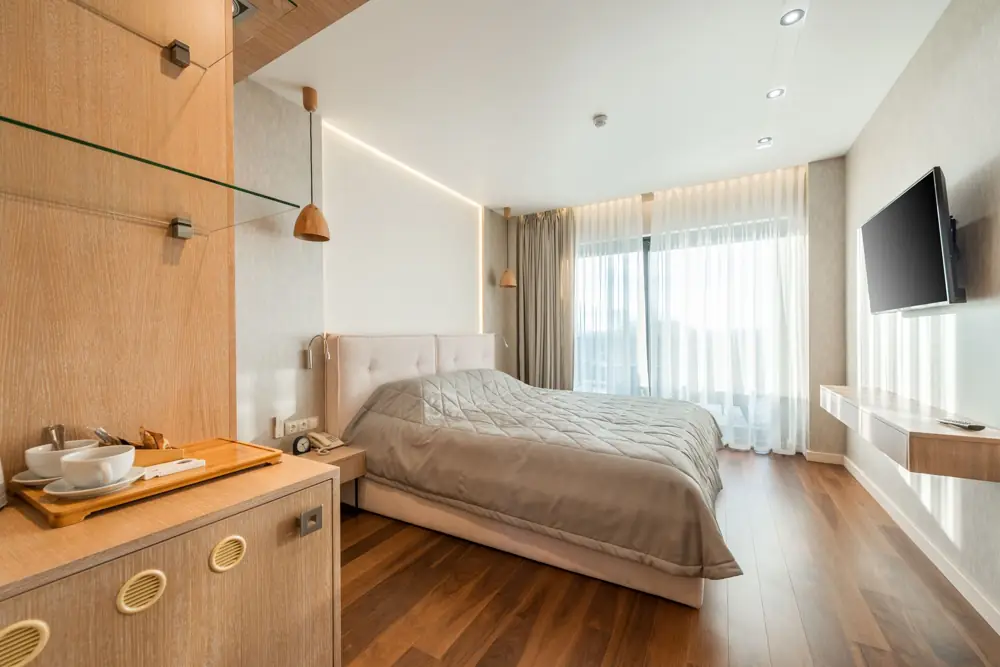
What the day rate includes: the full room (shower, bed, workspace), the property amenities (pool and gym access at many), and usually wifi — the daytime product the overnight structure leaves idle. The patterns it serves: the 5–9 hour layover (shower-and-sleep the transit genuinely prices), the early-arrival gap (the 2pm checkin standard the overnight flight lands against at 7am), and the red-eye-preparation pattern (the freshen-up before the meeting or the flight). The comparison frame: the lounge day-pass at $30–$60 prices the shower-and-snack version; the day room prices the bed-and-privacy version — the comfort tier the long layover honestly wants.
As a working planning number for the United States in 2026, the typical range sits at $40–$150 — with the categories and scenarios below explaining what moves a specific case up or down that range.
Key Categories and Options
The main approaches and how they compare on cost, convenience and use case:
| Category / Type | Description | Common Use Case | Cost / Effort Level |
|---|---|---|---|
| Standard 4-hour block | Shower, rest, workspace at standard brands | Short layovers, arrival gaps | $40–$80 |
| Premium 6–8 hour block | Full-day structure at airport-and-city locations | Long layovers, red-eye prep | $80–$150 |
| Lounge day-pass (comparison) | Shower-and-snack tier, no room | The shorter, lighter version | $30–$60 |
The right choice depends on the scenario that matches your travel pattern — the three below cover the situations most travelers actually face.

Three Realistic Scenarios
The 7-hour layover
An international arrival into a 7-hour connection at a hub airport.
- Day room (6-8 hour block) — $85–$130
- Lounge day-pass comparison — $35–$55
Why this matters: the long layover prices the day room — the bed-and-shower recovery the transit genuinely needs.
The 9am arrival gap
An overnight flight landing at 7am against a 2pm checkin.
- Day block until checkin (4 hours) — $45–$75
Why this matters: the arrival gap prices the day-use structure — the freshen-up-and-work window the early landing runs.
The red-eye preparation
A 10pm departure after a full workday, the freshen-up before.
- Day block (4 hours, evening) — $45–$80
Why this matters: the red-eye pattern prices the structure — the preparation the overnight flight honestly wants.
The scenarios differ mainly in scope and commitment level — the same decision logic applies at every scale.
Sample Budget Breakdown
The table below shows how a typical mid-range budget for day use hotel rooms cost per hour distributes across the main cost lines. Adjust the percentages to your own plans before using it as a savings target.
| Category | Estimated Amount | Explanation | Optimization Tip |
|---|---|---|---|
| Day-use block by market | $40–$150 | 4-to-8-hour structures | The airport-and-center markets carry the genuine availability |
| Lounge comparison | $30–$60 | The lighter tier | The shower-only patterns price the pass honestly |
| The hourly rate frame | $10–$20 | Effective per-hour cost | The 4-hour block at $60 prices $15/hour — the frame the value comparison runs |
Figures are indicative 2026 market ranges. Program terms, taxes and rates change — verify totals at the point of booking.
Practical Strategies to Control Costs
Cost control on day use hotel rooms cost per hour is mostly about information habits. These are the strategies that consistently deliver the largest savings:
Compare terminal hotels against off-airport with shuttle
Terminal-adjacent properties price 20–40% above equivalent off-airport inventory with free shuttles — the 10-minute shuttle trade is the honest arithmetic.
Advantages:
- Delivers measurable savings on real bookings
- No special status or points balance required
Disadvantages:
- Shuttle schedules run every 15–30 minutes and stop overnight — the arrival time decides the trade.
- Requires habits the casual traveler may not maintain
Use hotel day rates for long layovers
The 8+ hour layover converts from airport-floor misery to shower-and-sleep recovery at $80–150 — the day-use structure most transit airports now support.
Advantages:
- Delivers measurable savings on real bookings
- No special status or points balance required
Disadvantages:
- Requires terminal or airside access planning — not every layover route allows the hotel exit-and-return easily.
- Requires habits the casual traveler may not maintain
Book the night before for pre-6am flights
The 4am alarm versus the 10-minute shuttle arithmetic: the airport hotel converts departure mornings from two hours of risk into a walk to the terminal.
Advantages:
- Delivers measurable savings on real bookings
- No special status or points balance required
Disadvantages:
- The hotel night adds cost — the trade prices against the missed-flight risk and the sleep value.
- Requires habits the casual traveler may not maintain
Check transit hotels at the connection hub
Incheon, Changi, Doha and Istanbul built dedicated transit hotels inside security — the layover that stays airside prices against the city excursion honestly.
Advantages:
- Delivers measurable savings on real bookings
- No special status or points balance required
Disadvantages:
- Transit hotels price above city equivalents — the airside convenience is the premium being bought.
- Requires habits the casual traveler may not maintain
Common Risks and How to Avoid Them
Every booking pattern carries failure modes worth knowing before the money moves:
Day-use rooms carry hour limits that surprise
- The issue: The day rate typically covers 4–8 hours in a fixed window — the 10-hour layover prices differently than the comparison assumed.
- Why it happens: Confirm the window at booking..
- Prevention: Verify current terms before booking.
Airside transit access is not guaranteed
- The issue: The transit-hotel booking assumes you can reach it without immigration — connection rules, terminal changes and overnight airside closures break the assumption.
- Why it happens: Verify the access path before booking..
- Prevention: Verify current terms before booking.
Terminal hotels price the proximity premium
- The issue: The 20–40% premium over off-airport equivalents buys the walk-to-terminal convenience — honest for early departures, overspent for relaxed connections.
- Why it happens: Match the premium to the actual flight time..
- Prevention: Verify current terms before booking.
Shuttle schedules create the risk they solve
- The issue: The 25-minute shuttle cadence and the 5am start-window combine into the missed-flight scenario the terminal hotel eliminates — read the shuttle hours before the room rate..
- Why it happens: The 25-minute shuttle cadence and the 5am start-window combine into the missed-flight scenario the terminal hotel eliminates — read the shuttle hours before the room rate..
- Prevention: Verify current terms before booking.

Best Practices and Ongoing Habits
The recurring habits that keep costs controlled between trips:
| Habit | Frequency | Cost | Why It Matters |
|---|---|---|---|
| Check terminal distance in walking minutes | Every booking | Free | The proximity premium the map verifies. |
| Pre-price parking versus park-sleep-fly | Car trips | Free | The package arithmetic the parking-alone comparison misses. |
| Verify shuttle schedule and hours | Every booking | Free | The cadence and overnight coverage the 5am start depends on. |
| Confirm day-use window before booking | Every day-use | Free | The 4–8 hour limit that prices the layover honestly. |
These habits compound: the travelers who run them pay measurably less over years, not because of tricks, but because the information asymmetry runs their way.
Frequently Asked Questions
Are airport hotels worth it for early flights?
For pre-6am departures the arithmetic is decisive: the $120–180 room converts a 3:30am wake-and-drive into a 10-minute shuttle — the missed-flight risk, the sleep value and the winter-weather margin price the premium honestly.
Do airport hotels have free shuttles?
Most terminal-adjacent and off-airport properties run free shuttles every 15–30 minutes, typically 5am–midnight — the schedule details (overnight coverage, advance booking) decide the early-morning reliability the shuttle promise carries.
What is a day-use hotel room?
A room booked for daytime hours — typically a 4–8 hour window at 50–70% of the nightly rate ($80–150 at major airports) — built for layovers and long connections: shower, sleep, work, then checkout without an overnight commitment.
What is a park sleep fly package?
The night-before hotel stay bundled with 7–14 days of parking at $120–220 total — the package prices below parking-alone at many major airports, effectively making the hotel night free for early departures.
Summary
Planning day use hotel rooms cost per hour in the United States starts with the honest range — $40–$150 for the scenarios most travelers actually book — then works backwards through the hours-between structure.
Day-use rooms price the transit gaps honestly: $40–$80 for the 4-hour recovery, $80–$150 for the full-day structure the long layovers genuinely need. Book the block the gap serves — shower-only to the lounge, bed-and-privacy to the day room — and the hours between flights price their comfort at the rate the structure delivers. Verify current terms at the point of booking, price totals rather than headline rates, and let the comparison habits compound across every trip. Those three practices protect more budget than any single program choice.
Related Guides
- Heathrow Airport Hotel Cost With Lounge Access London
- Changi Airport Transit Hotel Cost Singapore Guide
- Dubai International Airport Hotel Cost Terminal Guide
- Tokyo Narita Airport Hotel Cost Capsule vs Full Room
- JFK Airport Hotel Cost With Parking Package New York
- Airport Hotel Free Shuttle vs Offsite Parking Cost USA